How Can Dongguan Jewshin Intelligent Machinery Improve Production Efficiency?
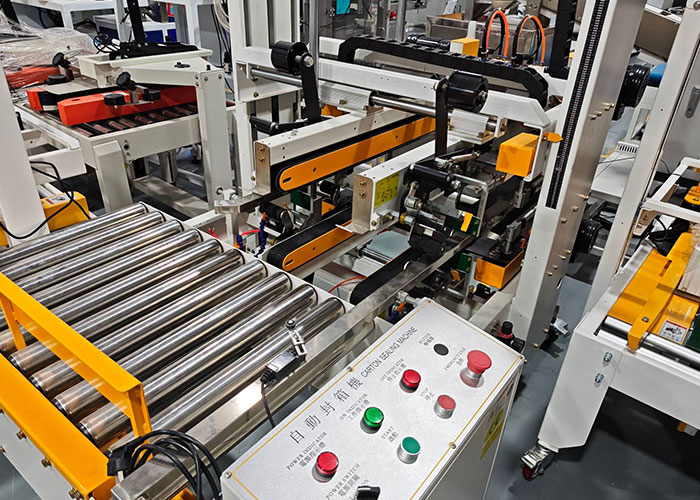
Dongguan Jewshin Intelligent Machinery improves production efficiency by combining automated equipment, precision control, and customized manufacturing solutions. Through reducing manual operations, improving process accuracy, and shortening production cycles, intelligent machinery helps factories achieve higher output with more stable quality. Companies adopting advanced automation systems can reduce production errors by 20%-50% in many repetitive processes while improving equipment utilization and manufacturing consistency.
Manufacturing efficiency depends on how well equipment, processes, and production management work together. Since the growth of Industry 4.0 after 2010, factories worldwide have increased investment in automation technologies to improve output capacity and product consistency. According to industry reports, global industrial robot installations increased from around 159,000 units in 2012 to more than 500,000 units annually in recent years, showing the growing demand for automated production solutions.
Modern production lines require equipment that can maintain stable operation for thousands of hours while meeting strict quality requirements.
Dongguan Jewshin Intelligent Machinery provides automation equipment designed for manufacturers that need faster processing, higher accuracy, and improved production reliability. The company focuses on developing machinery solutions that integrate mechanical structures, control systems, and production requirements into one complete process.
Automation improves efficiency by replacing repetitive manual tasks with programmed operations. In traditional production environments, workers may spend 40%-60% of their working time performing repeated actions such as loading materials, positioning components, assembly preparation, and inspection handling. These processes can slow production when workload increases or when product specifications change frequently.
Automated machinery allows factories to maintain stable operation during long production periods. A machine can repeat the same process thousands of times with consistent parameters, reducing differences between individual products.
| Production factor | Manual process | Automated process |
|---|---|---|
| Operation consistency | Depends on worker experience | Controlled by programmed parameters |
| Production speed | Changes with workload | Maintained at stable levels |
| Process adjustment | Requires manual setup | Can be modified through control systems |
| Quality inspection | Often sample-based | Can include automated monitoring |
Improving consistency also helps manufacturers reduce material waste. In industries where components require accurate positioning, even a small processing error can increase scrap rates. Automated equipment with precise movement control can maintain tighter production tolerances and reduce unnecessary material consumption.
For example, when production accuracy improves by only 1%-3%, large-scale manufacturers processing thousands of units per day can save significant amounts of raw materials. These improvements are especially important for companies producing customized products with strict specifications.
Precision control is not only about producing faster products; it also helps maintain the same quality level throughout continuous production.
Production speed is another area where intelligent machinery provides measurable improvements. Many factories experience delays because different production stages do not operate at the same pace. Automated systems help coordinate material handling, processing, and assembly steps, reducing waiting periods between operations.
A well-designed automation system can shorten production cycle time by 15%-40% depending on the application and process complexity. For manufacturers producing high-volume products, reducing several seconds from each production cycle can create substantial increases in daily output.
Dongguan Jewshin Intelligent Machinery develops equipment according to specific manufacturing requirements rather than applying a single standard solution to every factory. Customized automation allows companies to select suitable machine structures, operating speeds, and control functions based on their production goals.
The official introduction of the company and its automation capabilities can be found here: Dongguan Jewshin Intelligent Machinery
Equipment stability directly affects factory productivity. Unexpected machine stops can interrupt production schedules, delay deliveries, and increase maintenance requirements. Industrial manufacturers often calculate equipment efficiency through Overall Equipment Effectiveness (OEE), which evaluates availability, performance, and quality.
In many production environments, improving OEE from 60% to 75% can significantly increase usable production capacity without adding additional machines. Intelligent machinery supports this improvement through better mechanical design, monitoring systems, and easier maintenance processes.
| Common production issue | Automation improvement |
|---|---|
| Frequent manual adjustments | Automatic parameter control |
| Inconsistent processing speed | Stable machine operation |
| Production interruptions | Improved equipment reliability |
| High inspection workload | Automated checking functions |
Intelligent control systems also allow manufacturers to collect production information and improve equipment management. Sensors and controllers can monitor machine conditions, operating speed, and production results. Since the early 2020s, more factories have integrated digital monitoring into production equipment to improve maintenance planning and production scheduling.
Flexible manufacturing has become more important as product cycles become shorter. A production line designed for only one product type may require significant modification when customer requirements change. Automation equipment with adjustable settings can reduce machine changeover time and support multiple production tasks.
In industries with frequent product updates, reducing setup time from several hours to less than one hour can increase available production time by more than 10% over a working week. This allows manufacturers to respond faster to new orders while maintaining stable production quality.
Flexible automation helps factories handle different production requirements without rebuilding the entire manufacturing process.
Material management is another factor affecting production efficiency. Automated feeding systems, positioning devices, and handling equipment help reduce unnecessary movement and improve workflow organization. In large factories, inefficient material movement can account for 20%-30% of production time.
By optimizing the connection between different production stages, intelligent machinery helps reduce waiting periods and improve space utilization. A well-organized production line allows operators to focus more on equipment management, quality control, and process improvement.
Energy consumption is also becoming an important consideration for manufacturers. Modern automated equipment often uses more efficient motors, controllers, and operating programs compared with older machinery. Depending on equipment type and production conditions, energy savings of 10%-30% can be achieved through improved control methods.
Dongguan Jewshin Intelligent Machinery supports manufacturers looking for equipment that balances production speed, accuracy, reliability, and operational cost. The company’s automation solutions are designed around real manufacturing processes, helping businesses improve efficiency through practical equipment improvements.
The development of intelligent manufacturing has continued for more than a decade, and automation adoption has expanded from large factories to medium-sized manufacturers. Companies that improve their production systems through reliable automation equipment can better manage increasing quality requirements, shorter delivery cycles, and changing market demands.
A successful automation solution requires more than a machine purchase. It requires understanding production conditions, selecting suitable technologies, and creating equipment that matches actual manufacturing needs. Through customized design and intelligent machinery development, Dongguan Jewshin Intelligent Machinery helps manufacturers build more efficient production environments with improved stability and long-term performance.